

The Resource Center » Level 2 » Unit 5 »
Lesson 25: How Has the Right to Vote Expanded Since the Constitution Was Adopted?
Lesson Purpose
The Constitution originally left it up to the state governments to decide who should have the right to vote. In the early years of our nation, the states limited the right to vote to white men who owned property. In 1789, white men who did not own property, members of certain religious groups, freedmen, Native Americans, slaves, and women were not allowed to vote. In this lesson you will learn about how the right to vote has been expanded in the last two hundred years to achieve a basic ideal of our representative democracy-the constitutional right of all adult citizens to vote.
Lesson Objectives
When you finish this lesson you should be able to explain how voting rights were extended by changes in state voting laws, amendments to the Constitution, acts of Congress, and decisions of the U.S. Supreme Court.
Lesson Terms
civil rights movement
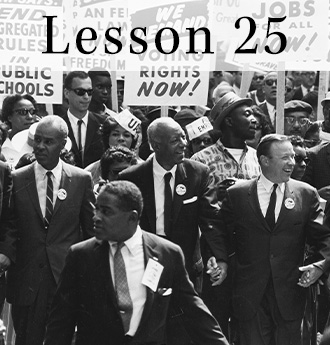
A social movement in the United States during the 1950s and 1960s, in which people organized to demand equal rights for African Americans and other minorities. People worked together to change unfair laws. They gave speeches, marched in the streets, and participated in boycotts.
Civil War Amendments
Fifteenth Amendment
Fourteenth Amendment
grandfather clause
literacy test
Nineteenth Amendment
poll tax
register
suffrage
Thirteenth Amendment
Twenty-fourth Amendment
Twenty-sixth Amendment
Voting Rights Act (1965)