
Women’s Rights
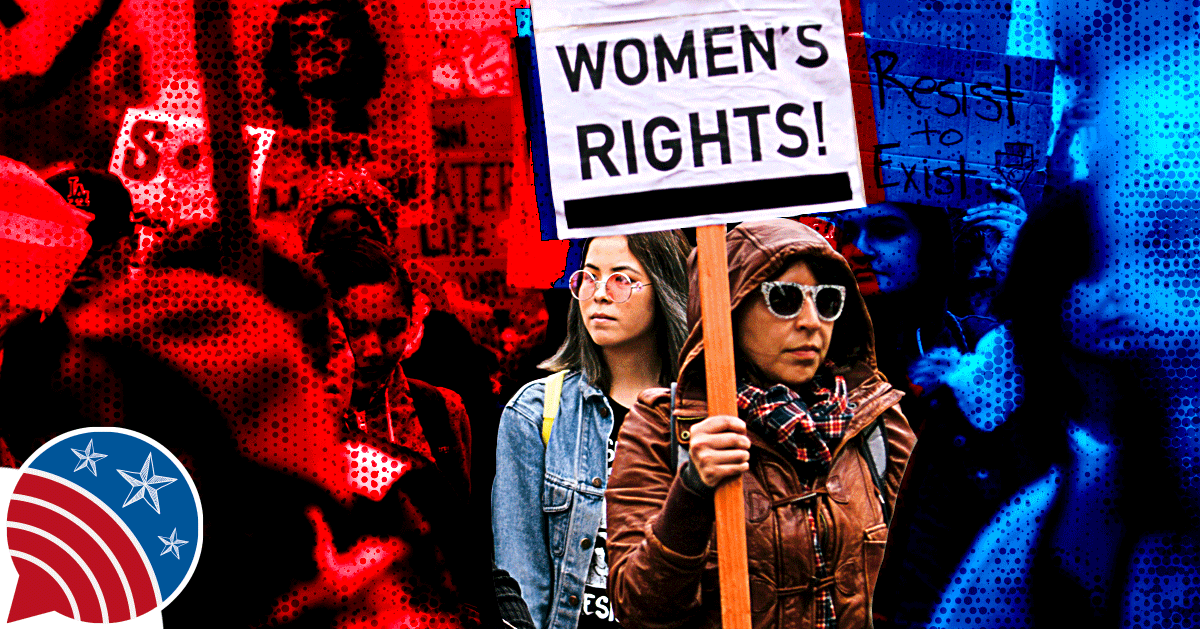
How far have women’s rights come and how much further do we need to go? Explore seminal events, cases, and texts such as the Seneca Falls Convention of 1848, Minor v. Happersett (1875), Roe v. Wade (1973), Dobbs v. Jackson (2022), and the Equal Rights Amendment. Prepare to engage in discourse around what needs to be done to secure women’s equal rights once and for all.
Podcasts & Videos
The Seneca Falls Declaration of Sentiments: Women’s Rights, Part 2
Instructions
- Watch and listen to the 60-Second Civics video below. If you'd like, you can also read along using the script that appears below the quiz. Or you can turn on the video's subtitles and read while watching the video.
- Take the Daily Civics Quiz. If you get the question wrong, watch the video again or read the script and try again.
Episode Description
Mark Gage: Welcome to 60-Second Civics, the daily podcast of the Center for Civic Education. I'm Mark Gage. We're joined once again by our special guest, Lisa Tetrault, associate professor of history at Carnegie Mellon University. Dr. Tetrault, what was the Seneca Falls Declaration of Sentiments and how does it relate to the Declaration of Independence?
Dr. Lisa Tetrault: At that first women's rights convention in Seneca Falls, New York, in 1848, the women didn't quite know how to organize the event, and so they decided to write a kind of manifesto beforehand, and they spent a couple of days casting about for a model, how should they write this? And they eventually decided to write it in the vein of the Declaration of Independence.
And they began, for example, "we hold these truths to be self-evident, that all men and women are created equal." And then they went on and instead of listing grievances against the king, as the original Declaration had, they list grievances against man, his crimes against women, not allowing them to own property, for example, not allowing them access to the professions, barring education, barring the franchise.
The lack of equal wages. And they modeled it after the Declaration of Independence, partly to make a claim to that legacy of freedom and that legacy of rights that had been denied so many people but laid out in the founding.
Mark Gage: Thank you so much for joining us again today, Dr. Tetrault. That's all for today's podcast. 60-Second Civics, where civic education only takes a minute.
Dr. Lisa Tetrault: At that first women's rights convention in Seneca Falls, New York, in 1848, the women didn't quite know how to organize the event, and so they decided to write a kind of manifesto beforehand, and they spent a couple of days casting about for a model, how should they write this? And they eventually decided to write it in the vein of the Declaration of Independence.
And they began, for example, "we hold these truths to be self-evident, that all men and women are created equal." And then they went on and instead of listing grievances against the king, as the original Declaration had, they list grievances against man, his crimes against women, not allowing them to own property, for example, not allowing them access to the professions, barring education, barring the franchise.
The lack of equal wages. And they modeled it after the Declaration of Independence, partly to make a claim to that legacy of freedom and that legacy of rights that had been denied so many people but laid out in the founding.
Mark Gage: Thank you so much for joining us again today, Dr. Tetrault. That's all for today's podcast. 60-Second Civics, where civic education only takes a minute.